Adapt vs Trace
A detailed comparison to help you choose the right AI tool for your workflow.
Adapt
Adapt is a company agent platform designed to centralize and operationalize AI across your entire organization. It functions as a shared "company brain," allowing AI agents to access and utilize your entire company's knowledge, connecting tools, and internal controls to automate workflows and answer complex questions. It is built for enterprises and companies looking to move beyond siloed AI implementations. By putting your company's accumulated intelligence into the hands of configurable agents, teams can automate complex tasks like resolving support tickets, performing financial reconciliations, or generating meeting briefings. What distinguishes Adapt is its single, shared infrastructure that runs all agents, regardless of complexity. It supports adaptive intelligence routing across multiple model types—including Frontier, open-weight, and custom keys—and offers deployment flexibility, including local open-source, cloud, and enterprise on-prem options.
View Adapt →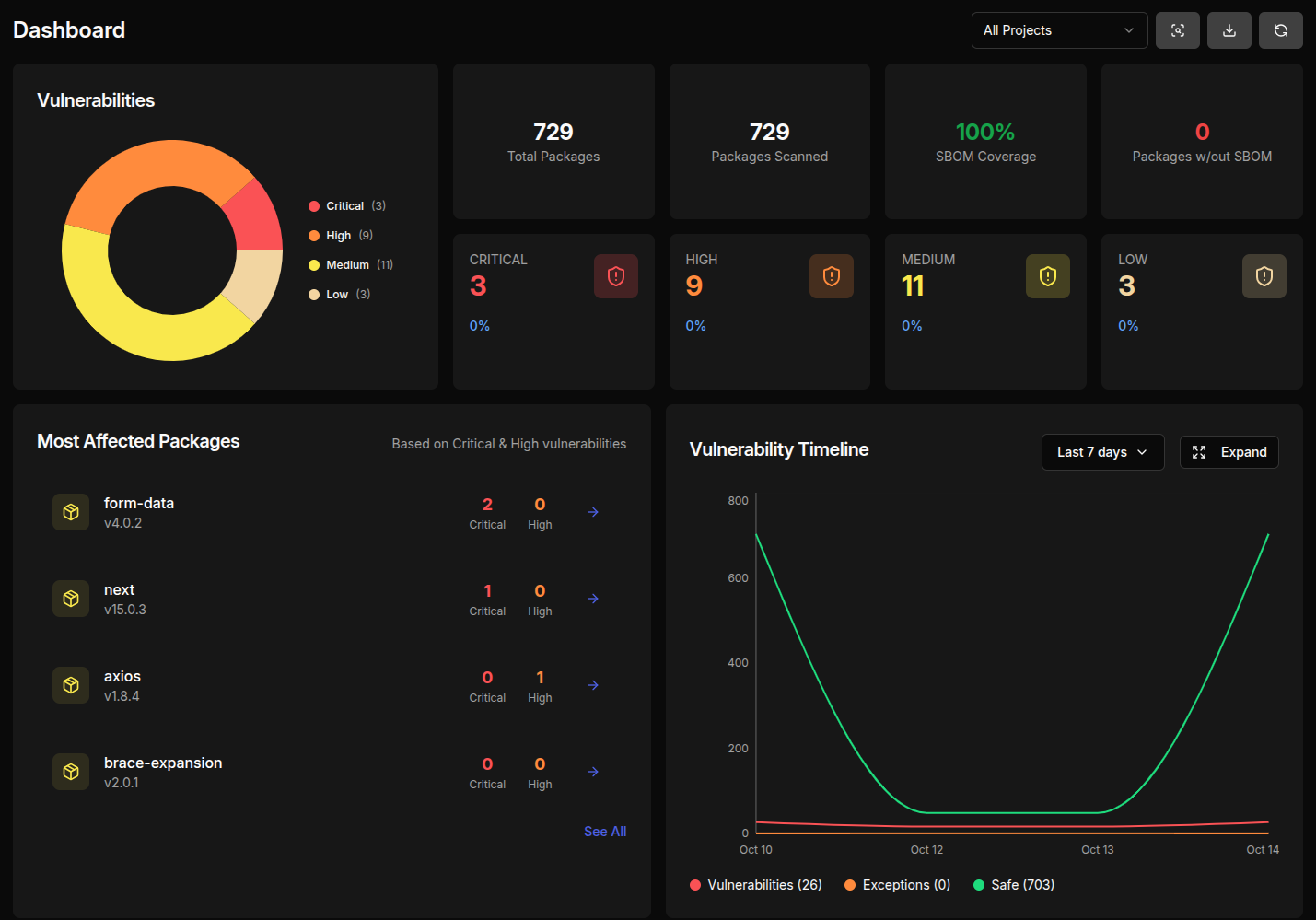
Trace
Trace-AI provides end-to-end supply-chain security by automatically generating Software Bill of Materials (SBOMs) using CycloneDX and SPDX. By connecting to GitHub or GitLab, the tool analyzes direct and transitive dependencies to provide a full inventory of all components in your software. The platform offers exploit-aware risk scoring, moving beyond traditional CVE lists to prioritize vulnerabilities with known, actionable exploits. It also tracks license compliance to identify potential issues with copyleft licenses (like GPL/LGPL) and provides critical vendor visibility, monitoring APIs and breach history. Built for enterprise transparency, Trace-AI ensures its core logic is open-source and auditable. It consolidates dependency analysis, risk scoring, and compliance checks into a single dashboard, allowing teams to easily generate audit-ready evidence for standards like ISO 27001 and SOC 2.
View Trace →Feature Comparison
Adapt
- •Adaptive routing across multiple LLMs (e.g., Frontier, open-weight)
- •Single shared platform for all company agents
- •Connectivity to Slack, Web, Email, and iMessage surfaces
- •Tool connection via API, MCP, or CLI
- •Open Source local and on-prem deployment
- •Built-in mechanisms for corporate knowledge and memory
Trace
- •Real-time SBOM generation (CycloneDX/SPDX)
- •Exploit-aware vulnerability scoring
- •License compliance tracking
- •Vendor monitoring and visibility
- •Direct and transitive dependency analysis
At a glance
| Adapt | Trace | |
|---|---|---|
| Category | Business | Business |
| Pricing | Open Source | Freemium |
| Community Rating | No reviews | No reviews |
| Upvotes on Stremit | 0 | 89 |
| Website | adapt.com ↗ | trace-ai.dev ↗ |
Adapt vs Trace: Which is Better?
Choosing between Adapt and Trace depends on your specific needs. Both tools belong to the Business category, making them direct competitors. Compare their pricing, features, and user reviews above to make the best choice for your workflow.
Visit the individual tool pages for more detailed information, community reviews, and feature breakdowns.
Frequently asked questions
What is the difference between Adapt and Trace?
Adapt: Adapt is a company agent platform designed to centralize and operationalize AI across your entire organization. It functions as a shared "company brain," allowing AI agents to access and utilize your entire company's… Trace: Trace-AI provides end-to-end supply-chain security by automatically generating Software Bill of Materials (SBOMs) using CycloneDX and SPDX. By connecting to GitHub or GitLab, the tool analyzes direct and transitive…
Is Adapt free?
Adapt is listed as Open Source on Stremit. Check the tool's site for current plans.
Is Trace free?
Trace is listed as Freemium on Stremit. Check the tool's site for current plans.
Are Adapt and Trace competitors?
Yes — both are Business tools on Stremit, so people often compare them before choosing.