Napkin vs Google Whisk
A detailed comparison to help you choose the right AI tool for your workflow.
Napkin
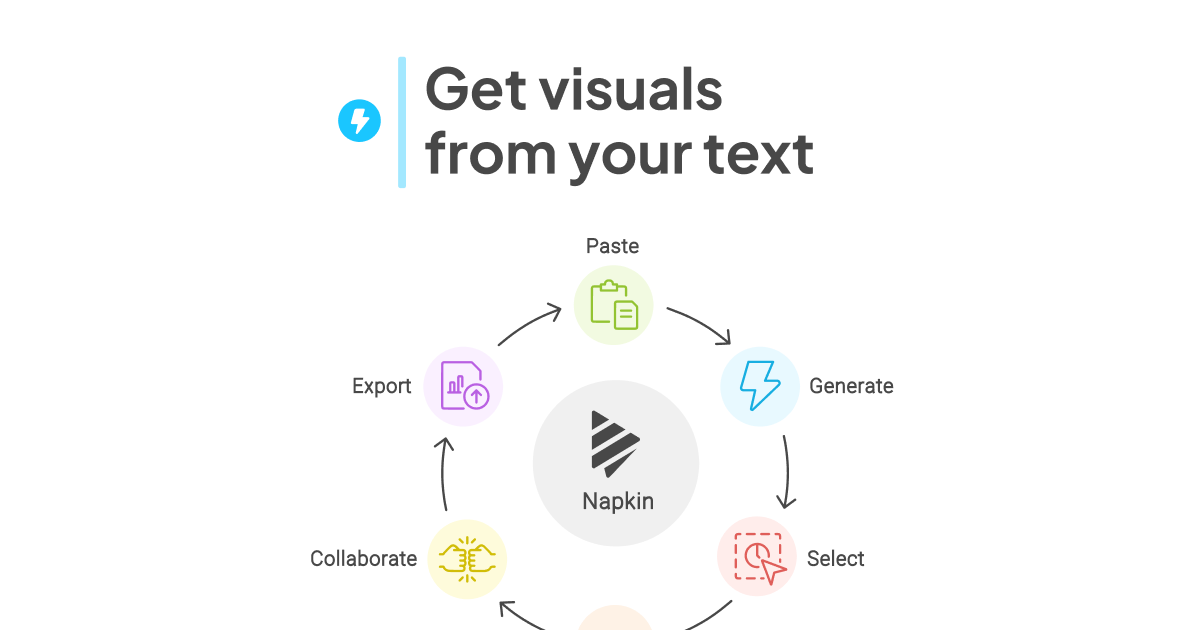
Napkin turns text into visuals. It creates presentation-ready slide decks, mind maps, flowcharts, and editable data charts from written ideas or data. It also offers an API for generating visuals at scale inside an existing workflow. Visual generation uses AI credits, with roughly one credit charged per word selected. The tool is aimed at individuals and small teams, dedicated visual creators and planners, and large teams and organizations with heavy visual needs. The free plan includes 500 AI credits per week, unlimited visual editing, file import from PPT, DOC, PDF, HTML, and MD, and unlimited PNG and PDF export. Visuals on that plan carry Napkin branding. Paid plans add more AI credits, premium AI image models, PPT and SVG export, brand styles, and removal of Napkin branding. The site says self-serve accounts may use anonymized interaction data to improve its AI, with an opt-out available, and that enterprise customer data is not used for training. Napkin states it is SOC 2 Type II compliant and ISO 27001 certified.
View Napkin →
Google Whisk
Whisk is an experimental AI tool designed for creative visualization and image remixing. It allows users to generate images and tell stories by utilizing multiple uploaded images as primary prompts, rather than relying solely on text. Users can drag and drop separate images to define the subject, the scene, and the style for their creation. The tool blends the essence of these input images to generate a unique output, making it a powerful visual concept remixer. This system leverages advanced models, including Imagen 3 for image generation and Gemini for writing detailed captions. While the tool is continuously evolving (with capabilities moving to Google Flow), it remains a resource for creators to explore visual ideas.
View Google Whisk →Feature Comparison
Napkin
- •Text-to-slide deck creation
- •Mind maps and flowcharts from text
- •Editable data charts
- •Unlimited PNG and PDF export on free plan
- •API for automated visual generation
- •SOC 2 Type II and ISO 27001 compliance
Google Whisk
- •Uses multiple images as prompts (subject, scene, style)
- •Generates images using Imagen 3 model
- •Uses Gemini to write detailed captions
- •Blends images by essence, not exact copies
- •Drag-and-drop interface for remixing
At a glance
| Napkin | Google Whisk | |
|---|---|---|
| Category | Design & UI | Design & UI |
| Pricing | Freemium | Freemium |
| Community Rating | No reviews | No reviews |
| Upvotes on Stremit | 78 | 89 |
| Website | napkin.ai ↗ | labs.google ↗ |
Napkin vs Google Whisk: Which is Better?
Choosing between Napkin and Google Whisk depends on your specific needs. Both tools belong to the Design & UI category, making them direct competitors. Compare their pricing, features, and user reviews above to make the best choice for your workflow.
Visit the individual tool pages for more detailed information, community reviews, and feature breakdowns.
Frequently asked questions
What is the difference between Napkin and Google Whisk?
Napkin: Napkin turns text into visuals. It creates presentation-ready slide decks, mind maps, flowcharts, and editable data charts from written ideas or data. It also offers an API for generating visuals at scale inside an… Google Whisk: Whisk is an experimental AI tool designed for creative visualization and image remixing. It allows users to generate images and tell stories by utilizing multiple uploaded images as primary prompts, rather than relying…
Is Napkin free?
Napkin is listed as Freemium on Stremit. Check the tool's site for current plans.
Is Google Whisk free?
Google Whisk is listed as Freemium on Stremit. Check the tool's site for current plans.
Are Napkin and Google Whisk competitors?
Yes — both are Design & UI tools on Stremit, so people often compare them before choosing.