MakePixel vs UI Design Made Easy, Powered By AI
A detailed comparison to help you choose the right AI tool for your workflow.
MakePixel
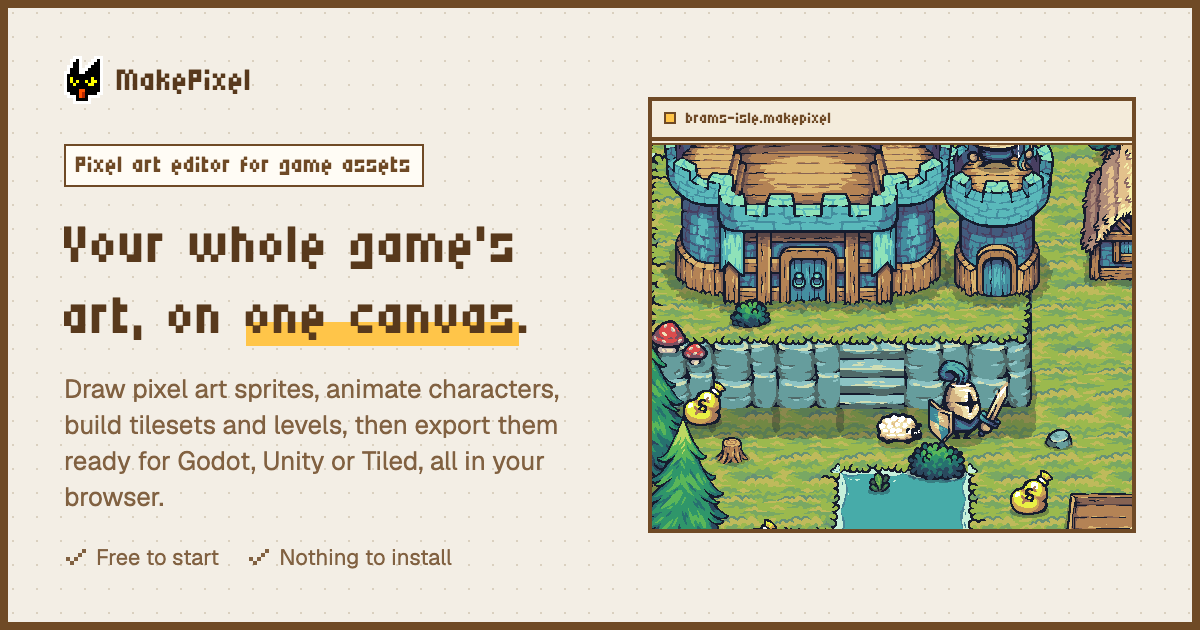
MakePixel is a pixel art editor for game assets that runs in the browser. You draw sprites, animate characters, and build tilesets and levels on one canvas, then export them ready for Godot, Unity, Tiled, or Aseprite. It can also generate pixel art from a text description at 1 credit per picture, and it includes an MCP server that lets coding agents read the canvas and pull sprites into a repository. It is aimed at people making game art who want a whole game's assets in one place. Sections, notes, and an outline keep sprites, animations, and tilesets organised, and a linked asset updates in every project when the original is edited. What sets it apart is autotiling: paint 13 tiles and MakePixel works out the full set of 47. Exports are written in the formats engines read directly, with the filter, pivot, and animation names already set. It is free to start, needs nothing installed, and works on desktop, tablet, and phone.
View MakePixel →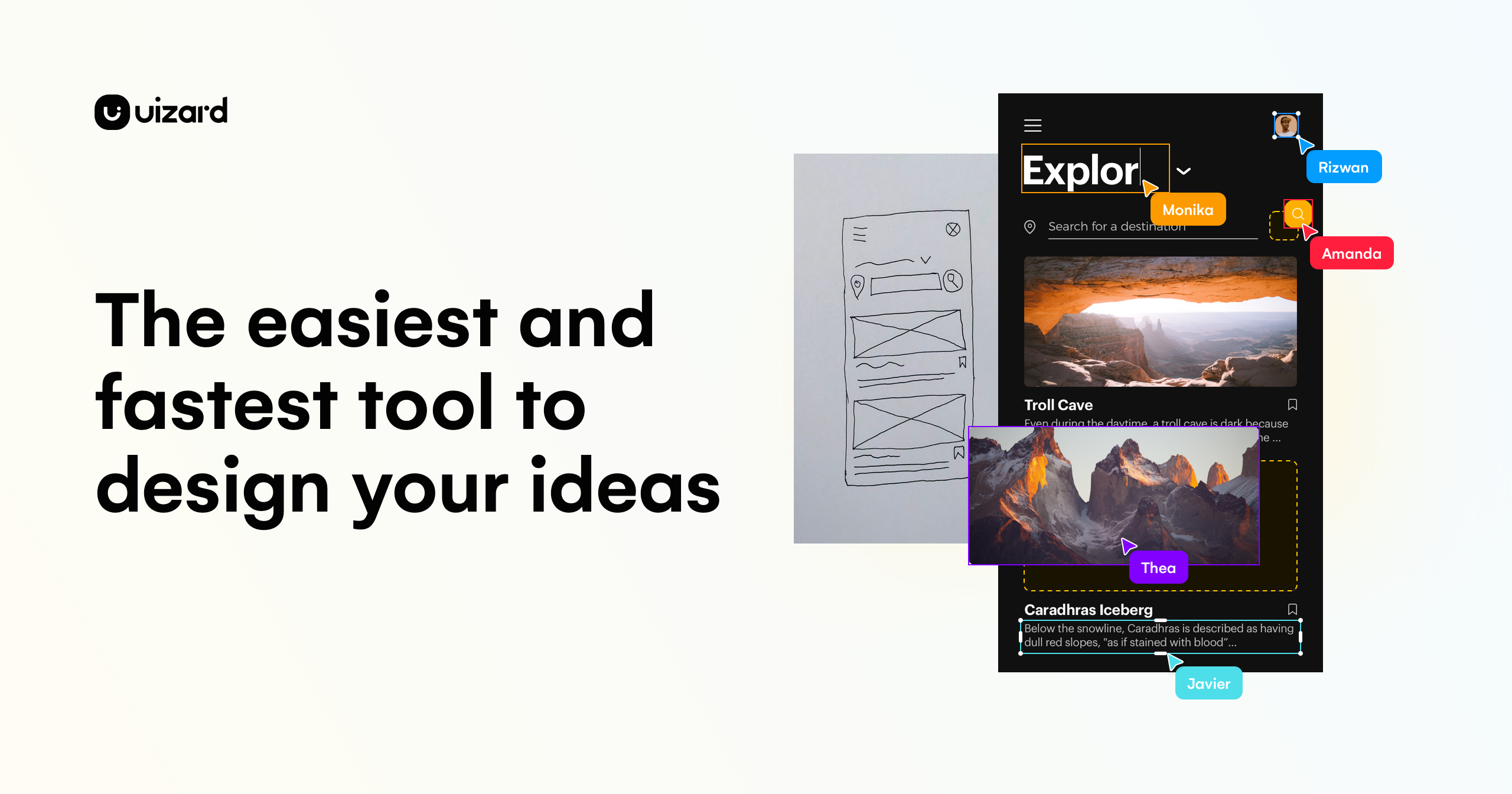
UI Design Made Easy, Powered By AI
Uizard is an AI-powered UI design tool for apps, websites, and desktop software. Users can generate multi-screen, editable prototypes from a simple text prompt using Autodesigner, turn screenshots or hand-drawn wireframes into editable mockups, and create new themes to change a project's style. Teams can collaborate in real time. The tool is aimed at product managers and product teams, designers and UX professionals, marketers, startup founders, consultants and agencies, and developers. The site also offers an Enterprise option for large businesses. It states that if you can use Google Slides or PowerPoint, you can use Uizard. What sets it apart is the combination of AI generation with a standard design editor. Components can be selected, described, and changed with Autodesigner, and the generated screens and components remain editable rather than fixed images.
View UI Design Made Easy, Powered By AI →Feature Comparison
MakePixel
No features listed yet.
UI Design Made Easy, Powered By AI
- •Text-to-prototype generation of multi-screen, editable designs
- •Autodesigner for modifying individual components with text prompts
- •Screenshot Scanner that turns screenshots into editable mockups
- •Wireframe Scanner that digitizes hand-drawn wireframes
- •Theme generation to change a project's style instantly
- •Real-time collaboration with the product team
At a glance
| MakePixel | UI Design Made Easy, Powered By AI | |
|---|---|---|
| Category | Design & UI | Design & UI |
| Pricing | Freemium | — |
| Community Rating | No reviews | No reviews |
| Upvotes on Stremit | 0 | 45 |
| Website | makepixel.ai ↗ | uizard.io ↗ |
MakePixel vs UI Design Made Easy, Powered By AI: Which is Better?
Choosing between MakePixel and UI Design Made Easy, Powered By AI depends on your specific needs. Both tools belong to the Design & UI category, making them direct competitors. Compare their pricing, features, and user reviews above to make the best choice for your workflow.
Visit the individual tool pages for more detailed information, community reviews, and feature breakdowns.
Frequently asked questions
What is the difference between MakePixel and UI Design Made Easy, Powered By AI?
MakePixel: MakePixel is a pixel art editor for game assets that runs in the browser. You draw sprites, animate characters, and build tilesets and levels on one canvas, then export them ready for Godot, Unity, Tiled, or Aseprite.… UI Design Made Easy, Powered By AI: Uizard is an AI-powered UI design tool for apps, websites, and desktop software. Users can generate multi-screen, editable prototypes from a simple text prompt using Autodesigner, turn screenshots or hand-drawn…
Is MakePixel free?
MakePixel is listed as Freemium on Stremit. Check the tool's site for current plans.
Are MakePixel and UI Design Made Easy, Powered By AI competitors?
Yes — both are Design & UI tools on Stremit, so people often compare them before choosing.