Warp: The Agentic Development Environment vs. Ref
Ein ausführlicher Vergleich, der dir hilft, das richtige KI-Tool für deinen Workflow zu wählen.
Warp: The Agentic Development Environment
Warp is an infrastructure platform for building cloud software factories. A factory is defined as code in a versioned file that sets repositories, secrets, MCP servers, cloud providers, integrations, and agent defaults. Each run checks out the relevant code so agents can inspect and change it. The platform is aimed at engineering teams that want to automate the software development lifecycle, beyond CI/CD. Work can flow in from Slack, Linear, or Jira, and teammates can watch, steer, or hand off runs from web, mobile, terminal, or IDE. What sets it apart is measurement built in. Every run is scored with evals, models can be compared with benchmarks, and observer agents open pull requests against the factory config to improve it. Warp also offers a free course, Warp Learn, for building a software factory.
Warp: The Agentic Development Environment ansehen →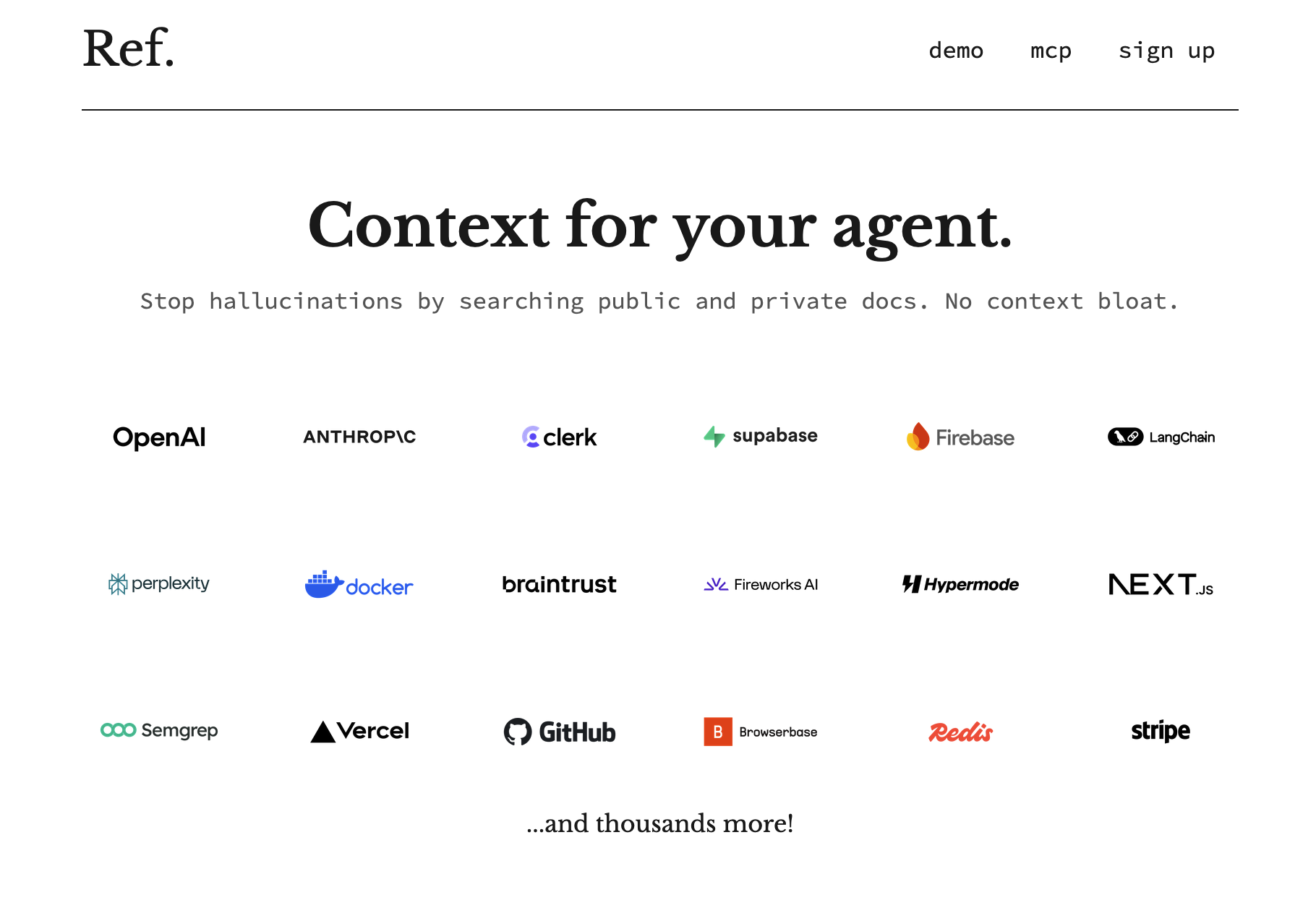
Ref
Ref is a multiplayer surface where a team and its coding agents work together. Each project has one shared doc that carries the context for that work. The site is aimed at development teams that run coding agents alongside people. It presents the shared doc as the place where project context lives, so team members and their agents can work from the same information. The website does not list pricing, supported agent platforms, or integrations, so those details are not covered here. Based on the site's own description, Ref's main idea is the shared model: team members and coding agents collaborate on one surface, with a single doc per project holding the context. The page frames this as a way to manage coding agents as a team.
Ref ansehen →Funktionsvergleich
Warp: The Agentic Development Environment
- •Factories defined as versioned code in one YAML file
- •Repositories, secrets, MCP servers, and cloud provider access in one definition
- •Slack, Linear, and Jira integrations for routing work
- •API, CLI, SDK, and MCP access
- •Evals score every run; benchmarks compare models
- •Observer agents open PRs to improve factory config
Ref
- •Multiplayer surface for team members and coding agents
- •One shared doc per project
- •Project context kept in the shared doc
- •Team-based management of coding agents
Auf einen Blick
| Warp: The Agentic Development Environment | Ref | |
|---|---|---|
| Kategorie | Code & Development | Code & Development |
| Preise | — | — |
| Community-Bewertung | Keine Bewertungen | Keine Bewertungen |
| Upvotes auf Stremit | 65 | 80 |
| Website | warp.dev ↗ | ref.tools ↗ |
Warp: The Agentic Development Environment vs. Ref: Was ist besser?
Ob Warp: The Agentic Development Environment oder Ref besser passt, hängt von deinen konkreten Anforderungen ab. Beide Tools gehören zur Kategorie Code & Development und sind damit direkte Konkurrenten. Vergleiche oben Preise, Funktionen und Nutzerbewertungen, um die beste Wahl für deinen Workflow zu treffen.
Auf den einzelnen Tool-Seiten findest du ausführlichere Infos, Community-Bewertungen und Funktionsübersichten.
Häufige Fragen
What is the difference between Warp: The Agentic Development Environment and Ref?
Warp: The Agentic Development Environment: Warp is an infrastructure platform for building cloud software factories. A factory is defined as code in a versioned file that sets repositories, secrets, MCP servers, cloud providers, integrations, and agent defaults.… Ref: Ref is a multiplayer surface where a team and its coding agents work together. Each project has one shared doc that carries the context for that work. The site is aimed at development teams that run coding agents…
Are Warp: The Agentic Development Environment and Ref competitors?
Yes — both are Code & Development tools on Stremit, so people often compare them before choosing.