Recto vs QuiverAI
Une comparaison détaillée pour vous aider à choisir le bon outil IA pour votre workflow.
Recto
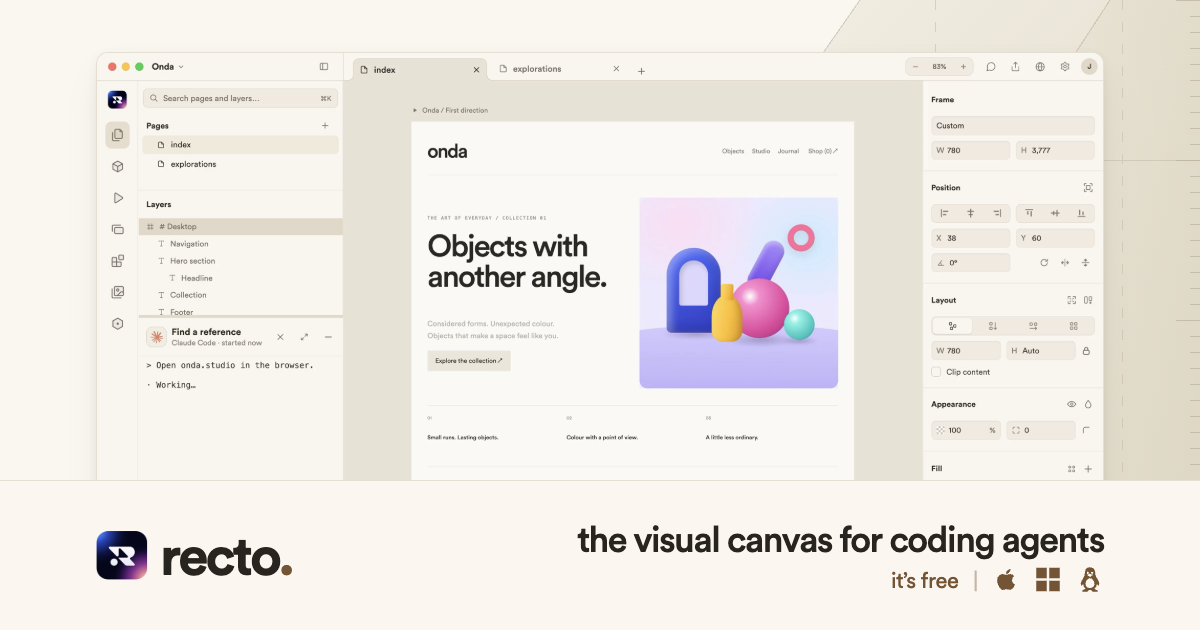
Recto is a visual canvas designed for coding agents, allowing users to build complex UI, motion, and 3D designs within a single environment. It functions by integrating powerful coding agents—such as Claude Code, Codex, and Cursor—directly into a real-time visual workspace. It is built for developers and designers who rely on AI agents but struggle with the fragmentation of traditional workflows. Recto eliminates the need to switch between terminals, browser previews, screenshots, and prompts, providing a fluid, collaborative design experience. What sets Recto apart is its local, fast operation. It runs directly on your computer, ensuring there are no network round-trips or API configurations required. This local architecture allows agents to work together seamlessly, enabling users to see every change, edit directly on the canvas, or reprompt the system without leaving the tool.
Voir Recto →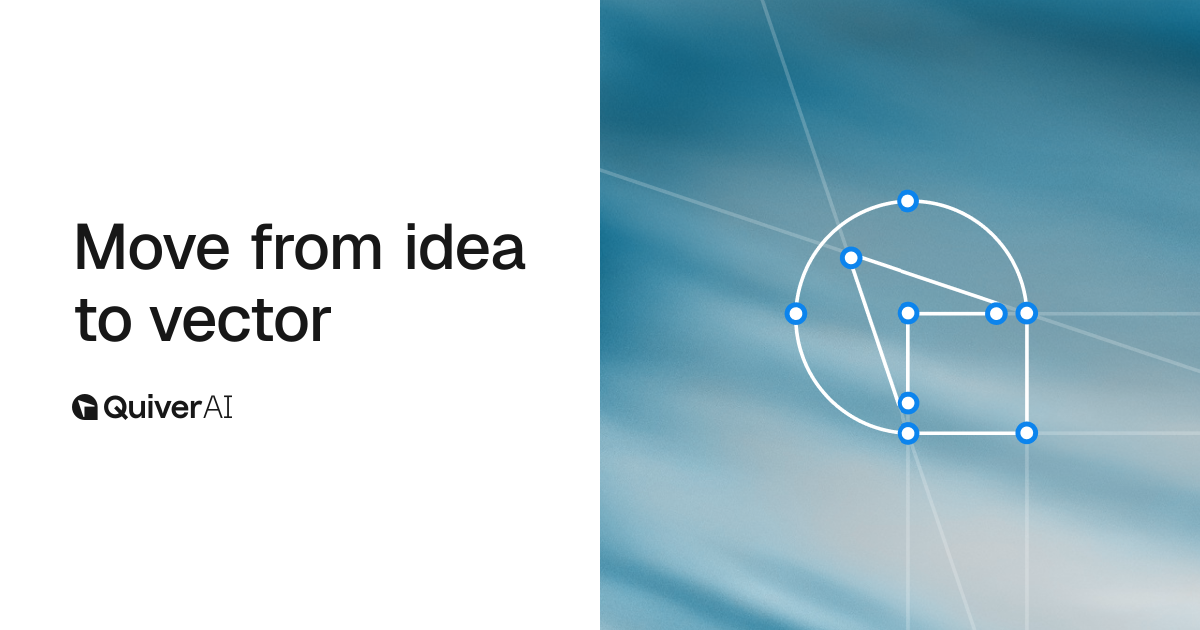
QuiverAI
QuiverAI generates, edits, and animates editable SVG vector graphics. It offers text to SVG, image to SVG vectorization, and SVG animation, with output designed to work in design tools. Its Arrow 2 model covers logos, illustrations, and animations, and typography is listed as coming soon. The tool is aimed at design teams building product, brand, and marketing assets. Developers can reach it through a REST API, Node.js and Vercel AI SDK packages, an MCP server for agents, and a CLI that installs SVGs as React components. QuiverAI's main difference is that its output stays as editable vectors rather than flat images. Animations run directly on the vector shapes and remain lightweight and controllable. Sandbox API keys return deterministic output and are not billed.
Voir QuiverAI →Comparaison des fonctionnalités
Recto
- •Builds UI, motion, and 3D designs
- •Visual canvas for coding agents
- •Works with multiple coding AI agents
- •Runs entirely locally for speed
- •Allows direct canvas editing and reprompting
QuiverAI
- •Text to SVG generation from prompts and references
- •Image to SVG vectorization
- •Direct SVG animation for logos, icons, and illustrations
- •Logo and illustration generation with editable vector output
- •REST API, Node.js SDK, and Vercel AI SDK support
- •MCP server, Cursor and Codex plugins, and CLI for React components
En bref
| Recto | QuiverAI | |
|---|---|---|
| Catégorie | Design & UI | Design & UI |
| Prix | Free | Contact for Pricing |
| Note de la communauté | Aucun avis | Aucun avis |
| Votes positifs sur Stremit | 0 | 72 |
| Site web | recto.design ↗ | quiver.ai ↗ |
Recto vs QuiverAI : lequel est le meilleur ?
Choisir entre Recto et QuiverAI dépend de vos besoins précis. Les deux outils appartiennent à la catégorie Design & UI , ce qui en fait des concurrents directs. Comparez leurs prix, fonctionnalités et avis ci-dessus pour faire le meilleur choix pour votre workflow.
Consultez la page de chaque outil pour des informations plus détaillées, les avis de la communauté et le détail des fonctionnalités.
Questions fréquentes
What is the difference between Recto and QuiverAI?
Recto: Recto is a visual canvas designed for coding agents, allowing users to build complex UI, motion, and 3D designs within a single environment. It functions by integrating powerful coding agents—such as Claude Code, Codex,… QuiverAI: QuiverAI generates, edits, and animates editable SVG vector graphics. It offers text to SVG, image to SVG vectorization, and SVG animation, with output designed to work in design tools. Its Arrow 2 model covers logos,…
Is Recto free?
Recto is listed as Free on Stremit. Check the tool's site for current plans.
Is QuiverAI free?
QuiverAI is listed as Contact for Pricing on Stremit. Check the tool's site for current plans.
Are Recto and QuiverAI competitors?
Yes — both are Design & UI tools on Stremit, so people often compare them before choosing.