Opal vs. Readless
Ein ausführlicher Vergleich, der dir hilft, das richtige KI-Tool für deinen Workflow zu wählen.
Opal
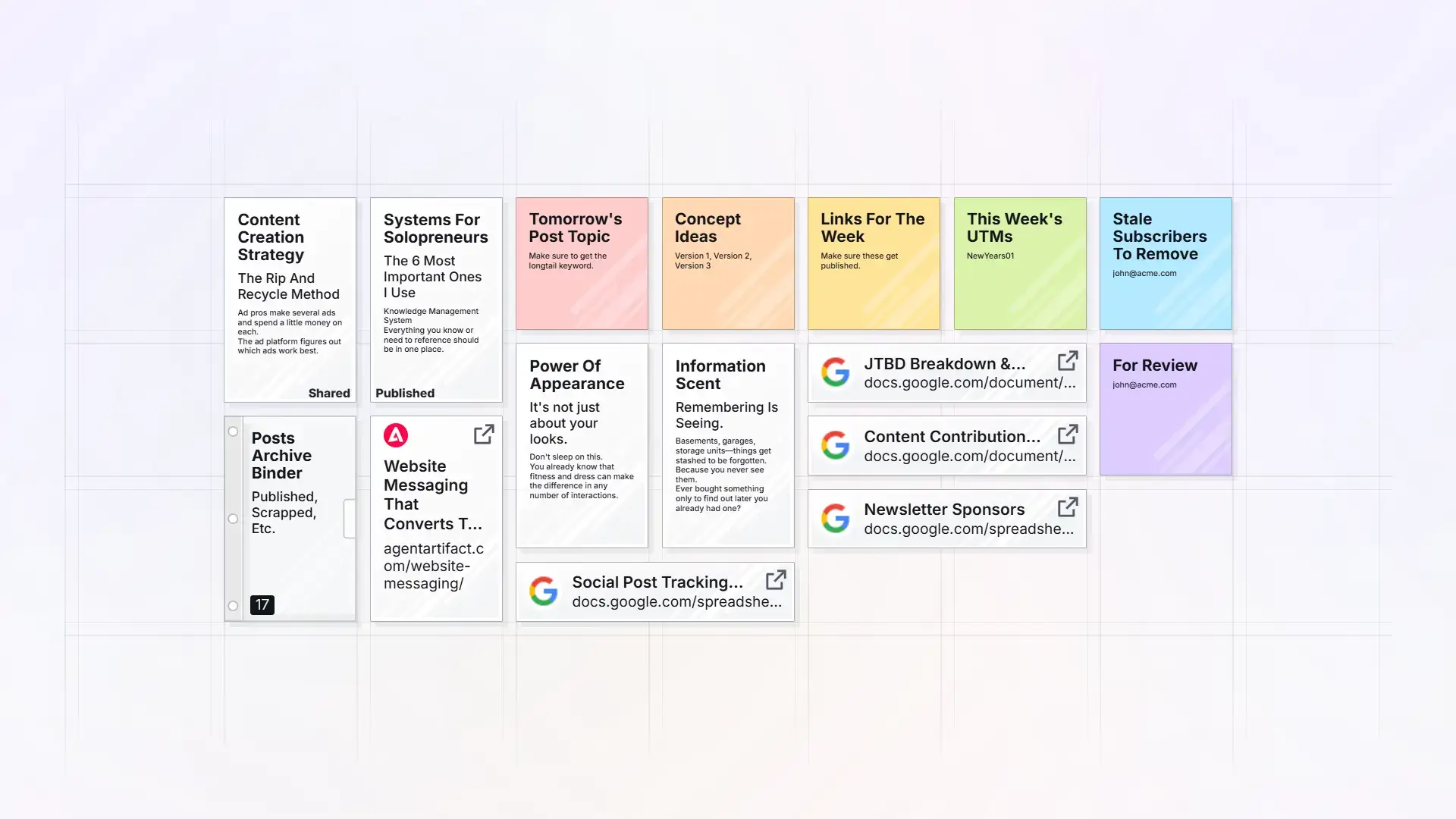
Opal Recall is a spatial note taking app. Users create or drag notes, docs, links, binders, files, and Google Docs and Sheets onto large, pannable digital desks. Items are placed on a visual grid, so users can find them by where they were put rather than by typing into a search box. It is built for freelancers, solopreneurs, and small teams who want to see all of a project's material at once. The site describes its setup as simple, with no onboarding wizard and no folder to choose when adding an item. The main difference from folder- and page-based tools is that the desk is the organizing structure. Users can open several items side by side in one tab, and each workspace gets its own URL. Access is currently by invitation in batches, and users register to reserve a spot.
Opal ansehen →
Readless
Readless turns newsletters received in your inbox, Substack publications, and RSS feeds into scheduled AI digests. You choose your delivery schedule and the language each digest is written in, and the summaries are produced in that language even when the originals use another. It is built for people who follow many newsletters, Substack writers, or feeds and want to read less. Pro provides summaries for each source, along with Hot Topics that highlight a story covered by at least two distinct senders. Max adds a Synthesis briefing that connects content across sources into themes, with source references. Readless's summary instructions aim to omit promotions and boilerplate. Pro costs $4.90 per month and Max costs $9 per month, and Max includes up to 8 schedules compared with 3 on Pro. Eligible new accounts can try Pro free for 7 days, but a card is required and the trial must be cancelled before it ends to avoid a charge.
Readless ansehen →Funktionsvergleich
Opal
- •Large, pannable digital desk for placing items on a grid
- •Drag-and-drop notes, docs, links, binders, and files
- •Google Docs and Google Sheets support
- •Open multiple items side by side in one tab
- •Find items by location without typing a search
- •Unique workspace URL for each user
Readless
- •Scheduled AI digests from newsletters, Substack, and RSS feeds
- •Individual source summaries on Pro
- •Hot Topics for stories covered by at least two senders
- •Synthesis thematic briefing on Max
- •Summaries in 13 selectable languages
- •Up to 3 schedules on Pro, up to 8 on Max
Auf einen Blick
| Opal | Readless | |
|---|---|---|
| Kategorie | Productivity | Productivity |
| Preise | — | Free Trial |
| Community-Bewertung | Keine Bewertungen | Keine Bewertungen |
| Upvotes auf Stremit | 47 | 62 |
| Website | opalrecall.com ↗ | readless.app ↗ |
Opal vs. Readless: Was ist besser?
Ob Opal oder Readless besser passt, hängt von deinen konkreten Anforderungen ab. Beide Tools gehören zur Kategorie Productivity und sind damit direkte Konkurrenten. Vergleiche oben Preise, Funktionen und Nutzerbewertungen, um die beste Wahl für deinen Workflow zu treffen.
Auf den einzelnen Tool-Seiten findest du ausführlichere Infos, Community-Bewertungen und Funktionsübersichten.
Häufige Fragen
What is the difference between Opal and Readless?
Opal: Opal Recall is a spatial note taking app. Users create or drag notes, docs, links, binders, files, and Google Docs and Sheets onto large, pannable digital desks. Items are placed on a visual grid, so users can find them… Readless: Readless turns newsletters received in your inbox, Substack publications, and RSS feeds into scheduled AI digests. You choose your delivery schedule and the language each digest is written in, and the summaries are…
Is Readless free?
Readless is listed as Free Trial on Stremit. Check the tool's site for current plans.
Are Opal and Readless competitors?
Yes — both are Productivity tools on Stremit, so people often compare them before choosing.